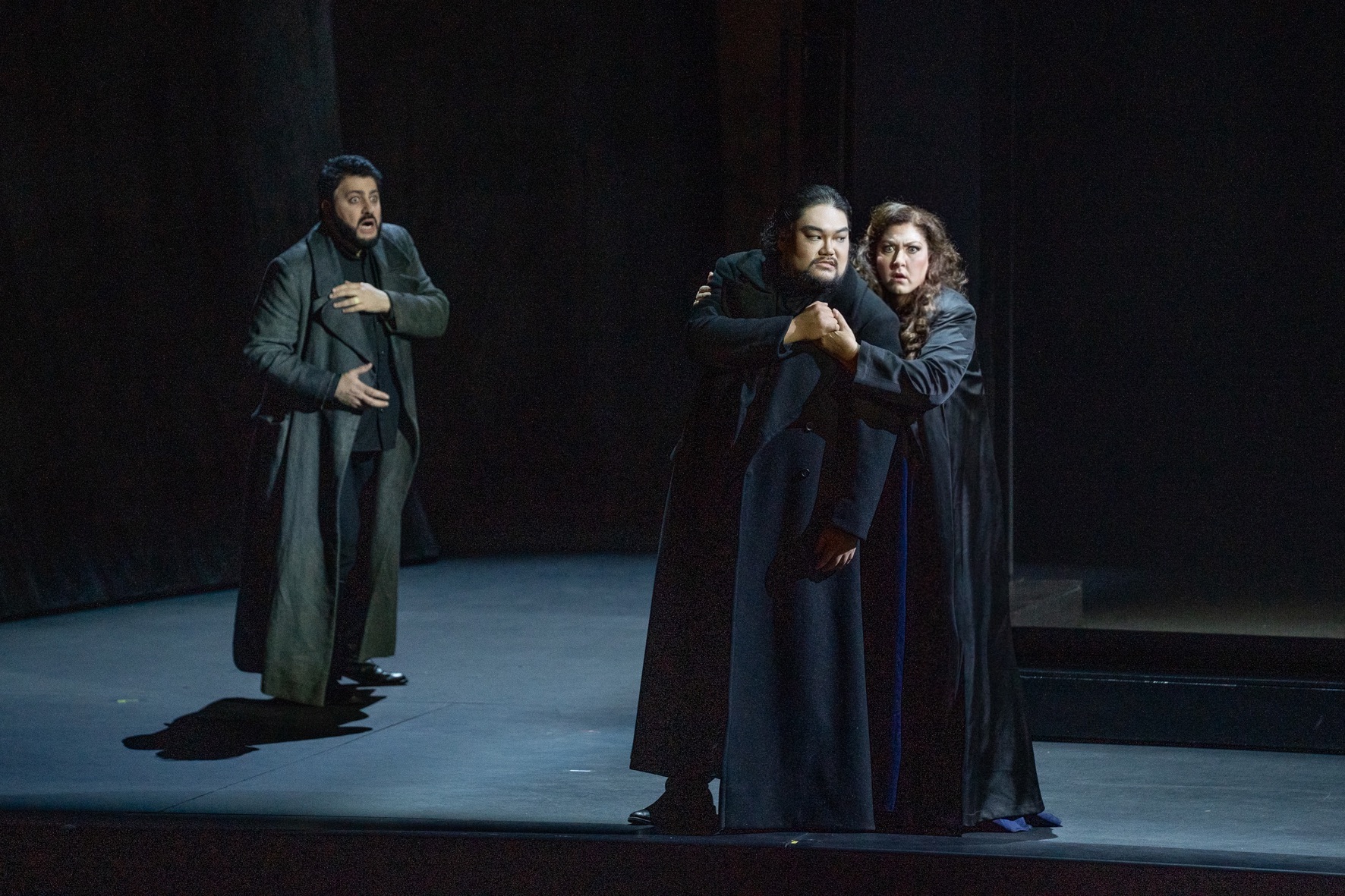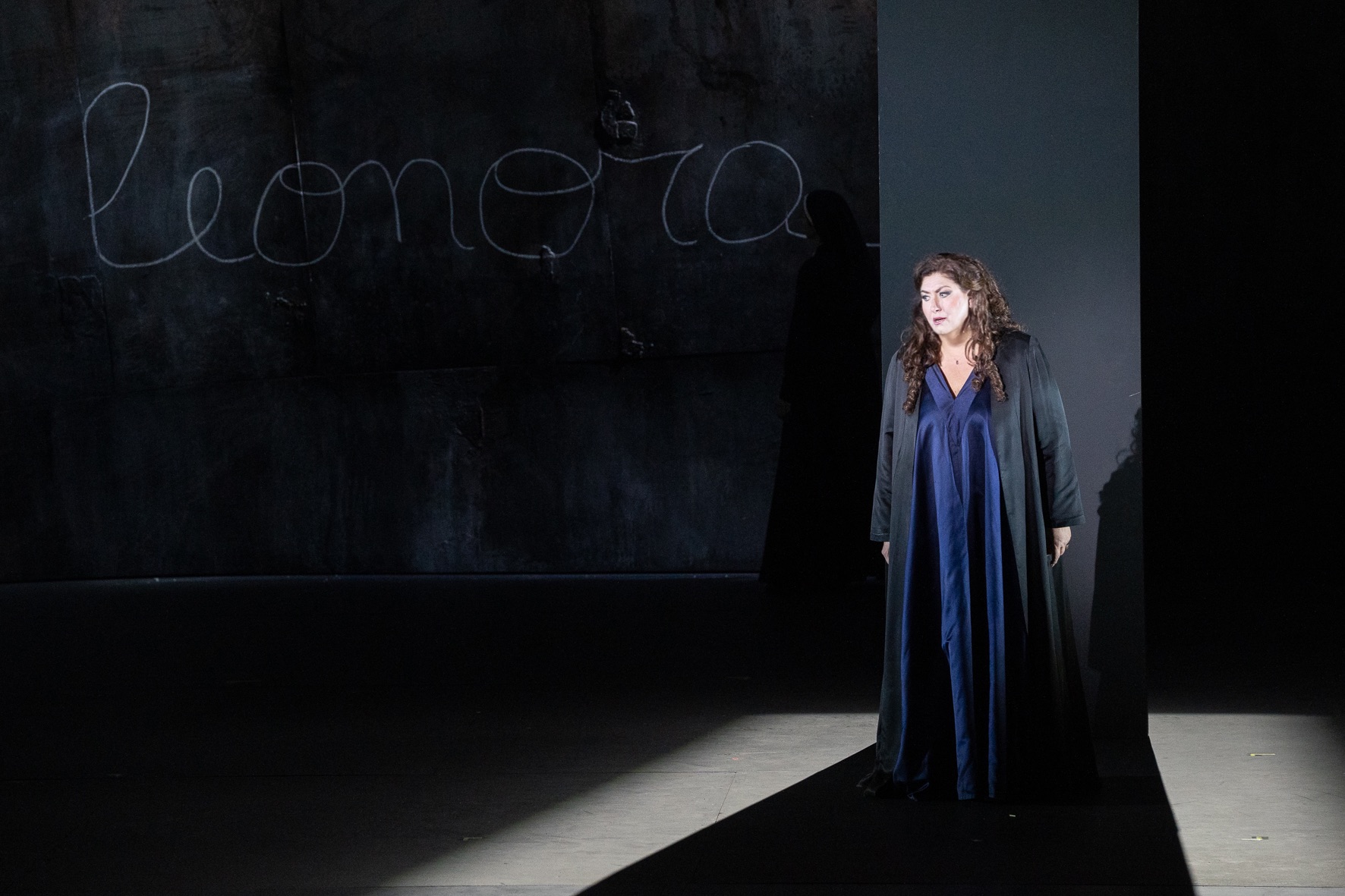
Gothic Network-…”Anna Pirozzi’s Leonora is regal, a highly talented artist making her
opera debut in the Julian capital. Impeccable with her
remarkable range and natural power, the Neapolitan soprano
tackles all the critical passages, starting with her first cavatina
‘Tacea la notte placida’, with elegance and ease thanks to her remarkable
technical ability and the cohesion of her sound, which make her one
of the most solid and acclaimed Italian voices on the international scene”
TriestePrima-…”Anna Pirozzi makes her debut in Trieste, preceded by her firmly established worldwide reputation, and from the moment she enters the stage, there is nothing in her exceptional vocal performance that does not confirm the precious caliber of the Neapolitan soprano.
Her tone, volume, flexibility, range, inexhaustible breath, absolute technical mastery, and control in all registers and in all types of music are all evident. Her timbre, volume,
flexibility, filati, inexhaustible breath, absolute technical mastery, and
control in all registers and across the infinite dynamic spectrum: to reflect on
Pirozzi is to consider these virtues in superlative terms. […] She
inexorably takes possession of the character and her metamorphoses,
shaping a memorable Leonora.”
Opera Mundus-…”In her pure essence as a dramatic soprano of agility, when Anna
Pirozzi has colleagues of her caliber, she gives her vocal best.
Her Leonora, despite moments of dreamy lyrical abandon,
has all the intransigence and imperative determination of her Abigaille,
Lady Macbeth, Dorabella, Elvira… In the tender Tacea la notte placida, she offers us
a luminous and unforgettable hymn to love, albeit in a
musical composition that is always so darkly tinged, with that
expansion in 6/8 time on Gioia provai che agl’angeli / solo è provar
concesso or, at the end of the opera, breaking into
Before… than others… to live / I… wanted to die for you!”
Rivista Musica-…“Anna Pirozzi’s vocal style […] is based not only on her powerful breath control,
but also on her lyrical-dramatic ability to shape the phrasing
and the focused vehemence of the cabalettas.”