
DiePresse – A balm for opera lovers’ aching hearts: Anna Pirozzi follows in the footsteps of Callas
In 2023 Anna Pirozzi had sung Medea for the first time in Athens, at the start of the
celebrations by the Greek National Opera, and of the whole country, surrounding the
centenary of Callas. That date now resonated in Epidaurus, for which a host of
international critics had also been invited, and Pirozzi carried the literally unique
evening: with dramatic verve as much as with lyrical pleading. In sound and manner of
delivery one felt at times reminded directly of her singular predecessor[…]
The combination of imposing outbursts and furious agility brought the audience to cheers.
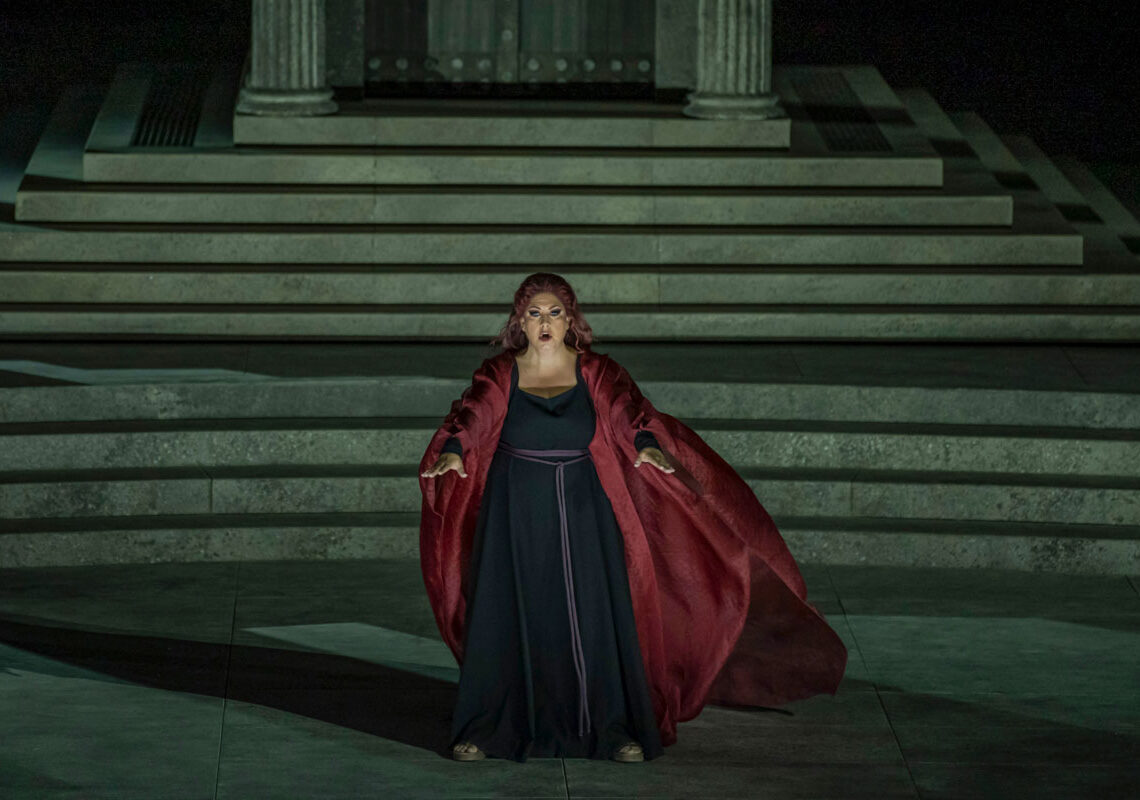
Oper! Magazine – Anna Pirozzi dares the leap. From the moment she takes the purple cloak away from her mouth and forms the first tones,there is no doubt about her authority. Callas steps aside, sometimes even entirely.
Completely gone, though, she never is over the course of the evening. Pirozzi’s
strongest moments are those of any good singer who knows how to master the
challenges of Medea: the invocation of the gods of the underworld, the great scene “E
che? Io son Medea” through to her death in flames and her last greeting to Jason: “Al sacro fiume io vo! Colà t’aspetta l’ombra mia!”, the forerunner of the threat in Tosca’s “O Scarpia, avanti a Dio!” The
reckoning, after all, only comes at the very end.
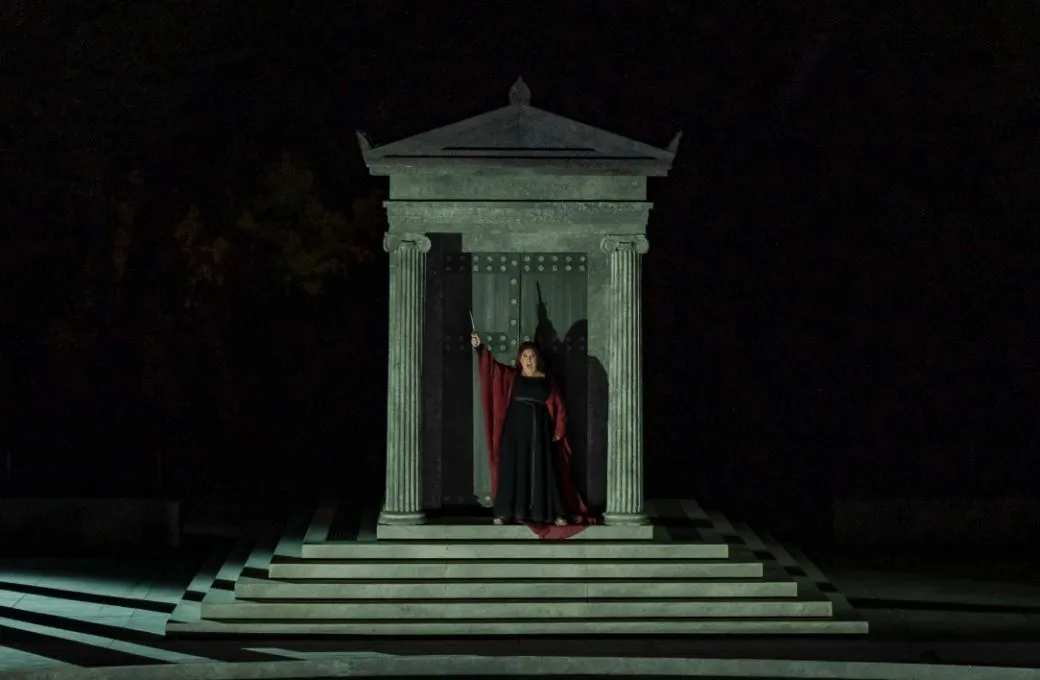
Bachtrack – The weight of the evening settled, inevitably, on Anna Pirozzi. Her presence was
felt before she opened her mouth: a shadowy figure, at once woman and demigod,
who seized the eye midway through Act 1 and then, the moment she sang, seized
everything else. “Ah! quale voce,” Giasone declares. And, indeed, it was a surprise,
uncannily close to Callas in timbre and a classical poise rare today. A ghost twice over,
within the story and around it.
Talkclassical – […|Anna Pirozzi was already a fantastic Medea three years ago but the
experience of that first production and this classic staging brought out the best of her.
“Dei tuoi figli” showcased this Medea at her most human and vulnerable. There was no
evil sorceress, just a betrayed spouse and mother asking for one last loving look from
Giasone. Tragic and moving. I loved the moment in act II when Medea contemplates
that Creonte has granted her one last day before she’s exiled and Medea says, fine,
Medea knows what to do with it.. Pirozzi’s tone changed instantly and we grunted
knowingly. The sorceress would take over now..
Pirozzi’s use of declamato in Act III was masterful with a healthy use of chest
voice. The recitativo was so clear in diction and intention and the attacks on
the top notes were firm and blazing at the finale. This is definitely one of
Pirozzi’s great roles and I hope she gets to sing it more often. Next they should
to revive the 1960 Norma for her
Euronews – The Italian soprano Anna Pirozzi took on the title role and won warm applause for
both her vocal and dramatic performance.
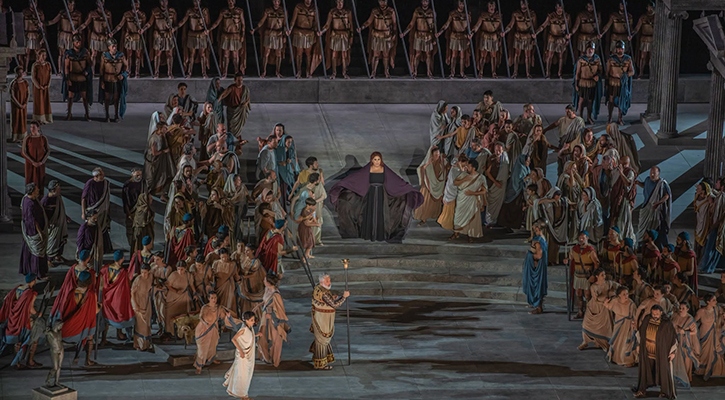
Opera actual – The privileged yet daunting task of stepping into Callas’s very shoes was entrusted to the
Italian soprano Anna Pirozzi, who chose to craft her own version of Medea, drawing on a
temperament undoubtedly far removed from the Greek diva’s overwhelming presence, and
portraying a Colchian princess who won over the audience with the iridescent lyricism she brought
to the role at every moment, supported by impeccable phrasing, outstanding in the pianissimi and
filati, not to mention the necessary edge she honed with a true spinto voice, which was at its finest
in the fast-paced third act.
Broadway world – The prominent dramatic soprano Anna Pirozzi riveted the audience with her vocal
delivery and Stage Presence, earning a standing ovation